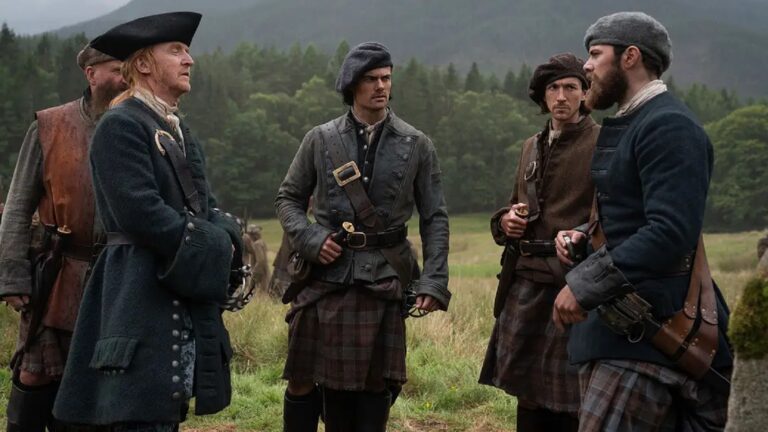


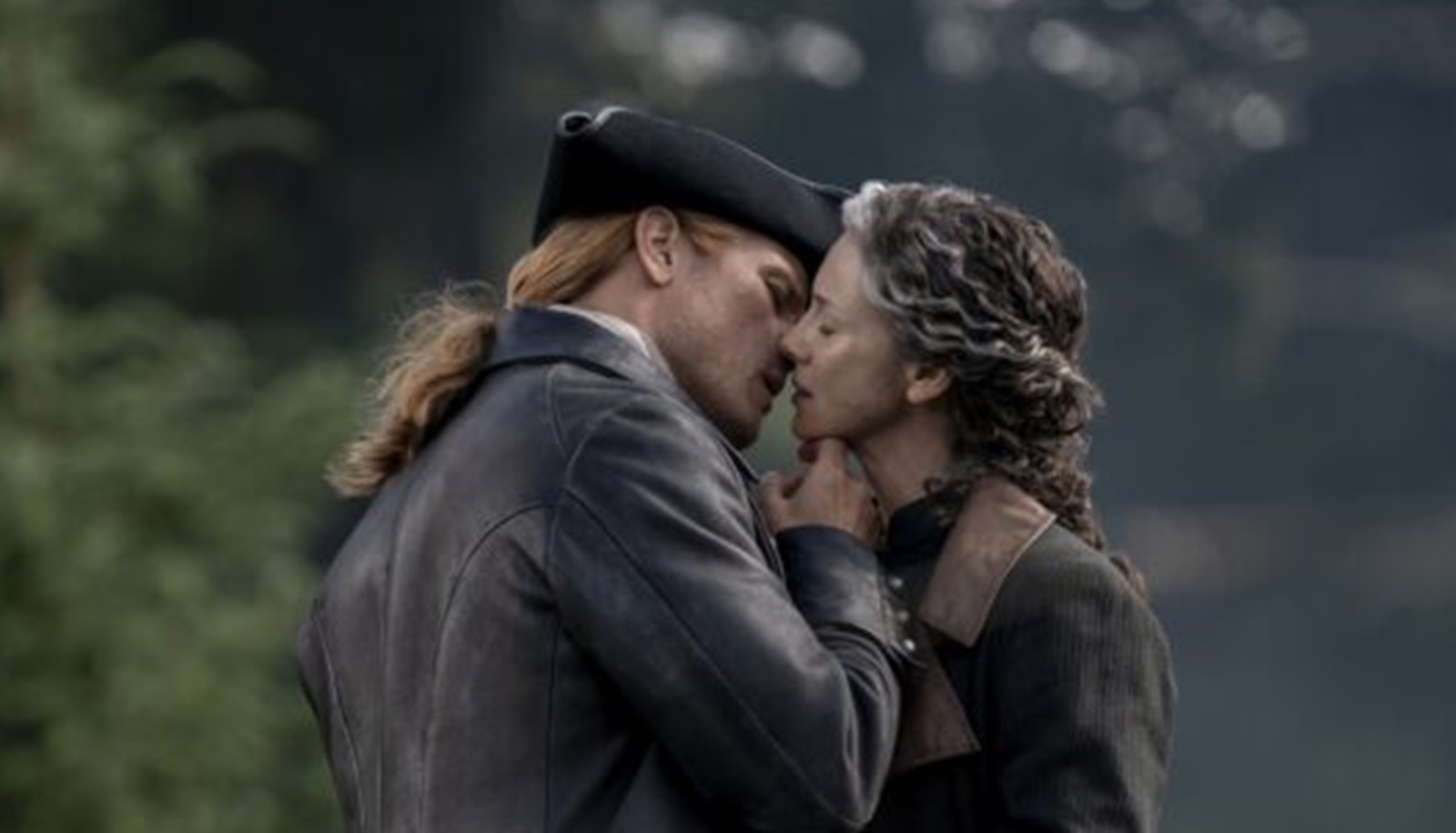
The Outlander series finale leans heavily into emotion, memory, and inevitability — opening with a moment that immediately pulls the story back to where it all began. As Raya Yarbrough’s original version of “The Skye Boat Song” plays, the series returns to its roots, creating a powerful contrast between the show’s earliest wonder and its final goodbye.
That return hits hard. After years of variations — including Sinéad O’Connor’s haunting interpretation in Season 7 — hearing the original theme again reawakens the feeling of discovery, when Claire and Jamie’s story was still unfolding rather than being remembered.
From there, the finale frames itself around reflection: Claire, the time-traveling nurse-turned-doctor, and Jamie, the Highlander turned landowner and leader, looking back at everything they’ve built while confronting the possibility that their time together may finally be ending.
It is, at its core, a story about holding on while preparing to let go.
Opening on Jamie writing his last will and testament offers a quiet, intimate entry point into the episode. While it’s a meaningful callback to his family and legacy, some of the surrounding repetition — particularly around the anticipation of King’s Mountain — slightly dilutes the tension, especially since the audience already understands where the story is headed.
Even so, the emotional stakes remain clear. Claire’s warnings in the previous episode still echo: people like them cannot change the past, no matter how hard they try. Yet the inevitability of history keeps pulling everything toward confrontation.
The battle itself is brief but devastating in its outcome. After surviving what should have been their final stand, Jamie rises in triumph — only to be struck down unexpectedly. It is a moment that lands not because of spectacle, but because of its unfairness. As the reviewer notes, “Ferguson should not be fighting anymore, should be conducting himself with honor. Jamie, stunned at making it through, has let his guard down; he deserves better than this coward’s killing shot.”
From there, the episode shifts into its most emotionally raw sequence. With Claire unable to save him on the battlefield, all she can do is stay beside him. Her refusal to leave becomes both love and denial — an attempt to hold time still, even as it slips away.
The most striking thematic turn comes in the return of ghostly Jamie outside Claire’s window in Inverness, bringing the series’ long-running mystery full circle. Whether interpreted as a spirit, a memory, or something between life and death, the moment reinforces the show’s central idea: separation is always temporary in the universe of Claire and Jamie.
As the review puts it, “no matter how time or distance strands them from one another, each period of separation will only last so long, and they will always find their way home to each other.”
That idea becomes the emotional backbone of the finale — a paradoxical love story that bends time but never breaks.
Claire’s attempt to bring Jamie back leans into more overt fantasy, described as “coming fully into her white-haired La Dame Blanche power.” While the performance carries emotional weight, the tone shifts into something more stylized and symbolic, blurring the line between life, death, and myth.
The reviewer questions how this resolution fits alongside the season’s earlier tragedies, particularly the sudden losses of key family members. The contrast between accidental, irreversible deaths and Claire’s deliberate act of restoration creates a tonal imbalance that is difficult to reconcile.
Still, the finale continues to explore legacy and continuity. Themes of storytelling, memory, and time travel — especially through characters like Fannie and the unresolved implications of future spinoffs — hint that the universe is far from finished, even if this central story is.
There is also a quiet acknowledgment of growth: Jamie’s evolving understanding of Claire’s past, Frank’s role, and the complicated emotional history between all of them. Even in its final moments, the series frames him not just as a warrior, but as someone who has learned to carry contradiction with grace.
In the end, the finale circles back to what it has always been about: love that refuses to obey time. Whether or not every narrative choice fully lands, the emotional intention is unmistakable.
As the reviewer reflects, knowing there is still one more Outlander novel to come makes this ending feel less like closure and more like a pause — a final inhale before whatever comes next.
And so, even in farewell, Claire and Jamie’s story resists ending cleanly. It simply continues somewhere beyond the frame.